I dream of a world where
decision intelligence gave you access to care no matter where you lived
responsible ML/AI for health systems wasn’t inaccessible, it was inevitable
even the most rural parts of our global community had access to quality surgery
medical supplies were globally available in a resilient supply chain
pandemic surveillance became robust with stronger predictive infrastructure
skilled medical professionals were no longer the binding constraint
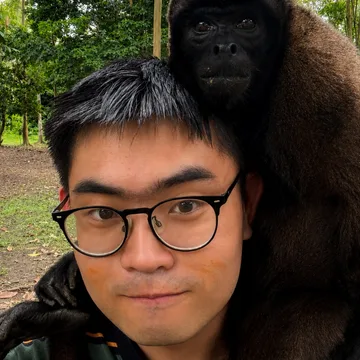
Hi! I'm Elliot, a 2026 Princeton graduate (summa cum laude, Sigma Xi) in Operations Research and Financial Engineering (pre-med) with minors in Applied & Computational Mathematics, Quantitative Economics, Global Health & Health Policy, and Bioengineering. My work sits at the intersection of health systems, biostatistics, operations research, machine learning, and economics. I'm passionate about using quantitative methods to address real-world health challenges, from optimizing antimicrobial supply chains in Botswana to modeling population genetics and vaccination program effectiveness.
Beyond research, I serve as a certified EMT, have traveled across five continents, and enjoy exploring history, geography, and music. I'm currently a predoctoral fellow in health economics at UC Berkeley, working with Prof. David Chan on tools and insights that improve health outcomes for underserved populations. After my gap, I hope to attend medical school and become a dual orthopedic surgeon-statistician, working on cool ML projects that can have positive impacts on patient care and global health.
Feel free to explore my research projects, check out my awards and interests, or get in touch!
Coursework (41 credits)
math, engineering, physics, cs
- ORF245: Introduction to Engineering Statistics
- ORF307: Optimization^%
- ORF309/MAT380: Probability & Stochastic Systems^%
- ORF335/ECO364: Introduction to Financial Mathematics^#%
- ORF363/COS323: Computing and Optimization for the Physical and Social Sciences^%
- ORF387: Networks^%
- ORF405: Regression and Applied Time Series^#%
- ORF418: Optimal Learning^%
- ORF498/499: Senior Thesis%
- MAT201: Multivariable Calculus
- MAT202: Linear Algebra
- PHY103/104: General Physics I/II
- COS126: Introduction to Computer Science
- APC350/MAT322: Introduction to Differential Equations^%
biology, chemistry, neuroscience
- MOL214: Introduction to Cellular and Molecular Biology
- CHM215: Advanced General Chemistry
- CHM301: Organic Chemistry I%
- CHM304: Organic Chemistry II%
- MOL345: Biochemistry*%
- EEB325: Mathematical Modeling in Biology and Medicine*+^%
- EEB327: Immunology+
- MOL459: Virology*+
- CBE419: Enzymes*
- NEU202: Cognitive Neuroscience
- NEU437: Computational Neuroscience*^%
- QCB408: Introduction to Statistical Genomics*+^%
mathematical economics
- ECO310: Microeconomics: A Mathematical Approach#%
- ECO311: Macroeconomics: A Mathematical Approach#%
- ECO312: Econometrics: A Mathematical Approach^#%
- ECO317: Economics of Uncertainty^#%
humanities & social sciences
- GHP350: Critical Perspectives in Global Health+
- GHP351: Epidemiology+
- SPI364: History of Pandemics+
- HIS393: History of Drug Policy+
- HIS317: Making of Modern India and Pakistan
- POL325: Presidency and Executive Power
- POL380: Human Rights
- WRI188: This Course is Out to Get You
- COM350: Ways of Knowing in Southern African Literature
Legend:
% Departmental Course · * Bioengineering Minor · + Global Health & Health Policy Minor
^ Applied & Computational Mathematics Minor · # Quantitative Economics Minor